Waterproofing and damp
Rising damp on ground floor walls: why the lower wall stays wet
How to recognise it
- A tide mark or salt band up to about a metre high
- Peeling paint and crumbling putty at skirting level
- Worse after the monsoon and in low-lying plots
- Found on many walls of the ground floor, not just near bathrooms
Practical fixes for existing homes
- Keep the ground outside sloping away from the wall and below plinth level.
- Fix leaking pipes and stop water collecting near the house.
- Remove damaged plaster and putty from the affected band.
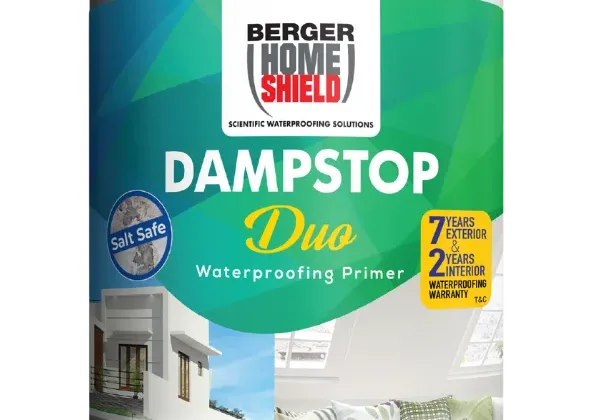
- Let the wall dry, then use Berger HomeShield Dampstop Duo as primer; on exterior faces, Berger Dampstop Advanced adds protection.
- Repaint, avoiding thick putty layers on the lower wall.
For new construction
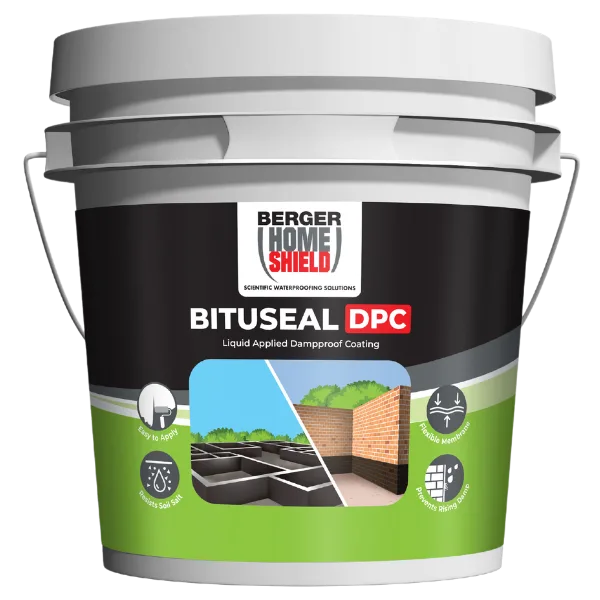
The lasting answer is a damp-proof course at plinth level during construction. A liquid bitumen membrane such as Berger HomeShield Bituseal DPC is used for this. It costs far less to do at the start than to fight damp for years afterwards.
Before any waterproofing job
- Find where the water enters before choosing a product
- Let the surface dry fully; most coatings fail on wet substrates
- Clean off moss, dust, loose plaster and old peeling coats
- Open and fill cracks; seal joints, pipe entries and parapet corners
- Follow the coat count and curing time on the data sheet
- Paint only after the waterproofing has cured
Signs that the problem needs an expert look
- The damp patch keeps growing after you have repaired the obvious cause
- Plaster sounds hollow when tapped, or pieces fall off
- Cracks are wider than a few millimetres or run diagonally from window and door corners
- Water appears in a room with no bathroom, tank or pipe nearby
- Steel bars are visible or rust stains run down the concrete
These can point to structural movement or hidden leaks. Get the source checked before spending on coatings.
The right season for waterproofing in this region
Across Gwalior, Morena, Bhind and the other districts, the useful window is the dry period from March to June, before the July rains. Roofs and walls are dry, coatings cure properly and you can test the work before the monsoon. Small repairs can be done in October and November after the rains, when walls have dried out. Avoid starting major waterproofing in July and August: wet surfaces are the most common reason coatings fail early.
Berger products that suit this job
| Product | Range | What it is |
|---|---|---|
| Berger HomeShield Bituseal DPC | Premium | HomeShield Bituseal DPC is a liquid elastomeric bitumen membrane for damp-proofing concrete above and below ground. |
| Berger HomeShield Dampstop Duo | Premium | HomeShield Dampstop Duo is an acrylic primer that resists damp, alkali and efflorescence from both sides of the wall. |
| Berger Dampstop Advanced | Premium | Dampstop Advanced is a damp-proofing barrier that partly soaks into the surface and partly forms a film on top. |
Buying Berger outside Gwalior city
PT Enterprises supplies more than 70 Berger dealers across the Gwalior region, so the products in this guide are available in Gwalior, Morena, Bhind, Sheopur, Shivpuri, Datia, Guna, Ashoknagar. Call or WhatsApp +91 77559 81105 and we will tell you the nearest dealer and check stock.
Useful next steps
- Waterproofing solutions
- Free site visit and estimate in Gwalior
- Berger waterproofing products
- Our Berger DOCO store in Gwalior
Frequently asked questions
Will waterproof paint stop rising damp?
It improves the finish but does not stop moisture rising inside the wall. Reducing moisture at the source matters more.
Is rising damp common in the region?
It is common in older houses and low-lying areas, especially after heavy rains.
Can you check my house?
In Gwalior city our free site visit covers damp checks. Elsewhere, WhatsApp photos to +91 77559 81105.
About this guide: written by the team at PT Enterprises, the authorised Berger Paints distributor for the Gwalior region, which supplies dealers in eight districts and runs a Berger DOCO store in Gwalior. Product details follow Berger’s published data sheets; check the data sheet of your exact product for coverage, coats and drying time.